
Travel Technology
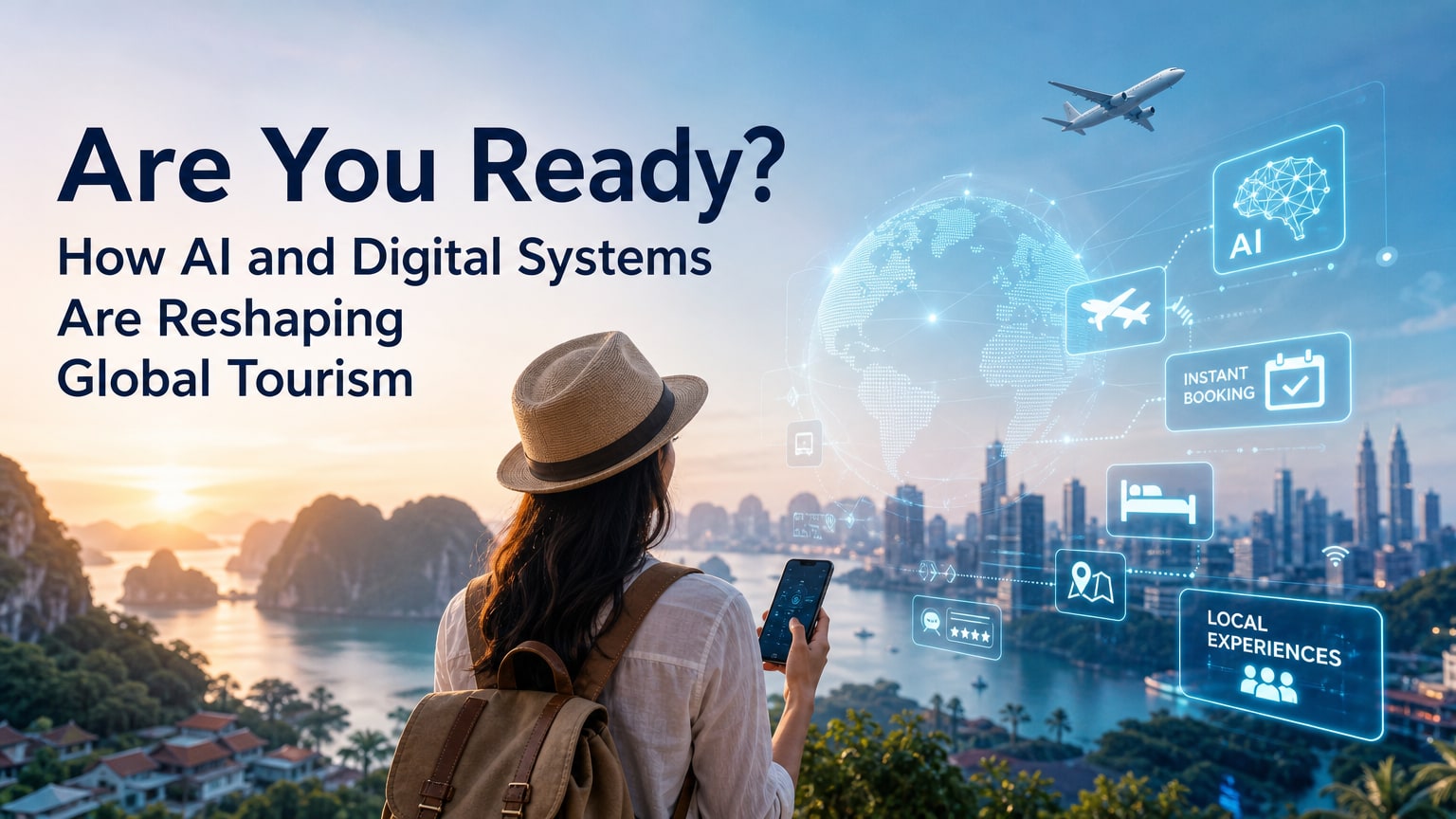
Are You Ready? How AI and Digital Systems Are Reshaping Global Tourism
Discover how artificial intelligence, instant booking platforms, and digitized local experiences are revolutionizing the modern global travel industry.
The global travel landscape is moving at an unprecedented pace.
Tourism has evolved into a vital macroeconomic pillar, driving trillions of dollars in global output and sustaining hundreds of millions of livelihoods worldwide.
Yet behind these impressive figures lies a profound paradigm shift: modern tourism has expanded far beyond traditional flight bookings and hotel stays.
It now encompasses an intricate web of bespoke activities, cultural immersions, regional transport networks, and curated events that define the journey.
As traveler expectations shift, forward-thinking operators face a critical question: is your business positioned to capture this burgeoning demand?
The Evolution of the Traveler Journey
To understand the current transformation, it helps to examine how traveler behavior has matured over the decades.
In the era of conventional travel agencies, planning a trip was a rigid, linear process: consult an agent, manually compare brochure itineraries, issue paper tickets, and depart.
It was dependable, but inherently slow and constrained by physical availability.
The rise of digital connectivity shattered those constraints. The initial online revolution empowered travelers to research destinations independently, compare options in real time, and lean heavily on user-generated ratings and social proof.
Today, smartphones serve as real-time concierges, enabling spontaneous adjustments and instant booking from virtually anywhere on the globe.
The Emergence of the AI Tourism Marketplace
We are now transitioning from traditional online search into the age of artificial intelligence. AI is no longer a speculative technology reserved for tech conglomerates; it is actively powering consumer discovery.
Travelers can request highly specific, hyper-personalized itineraries—such as a tailored culinary and heritage weekend in Langkawi—and receive structured, bookable suggestions within seconds.
The future of destination marketing is defined by precision, real-time inspiration, and immediate fulfillment. If an offering cannot be surfaced and secured on demand, it effectively does not exist for the modern traveler.
When consumers demand speed and convenience, algorithms favor experiences that are clearly packaged, seamlessly discoverable, and immediately transactable.
Two operators may offer an identical, high-quality cultural walking tour, but the operator with structured digital availability, verified feedback, and automated checkout is the one the AI engine will discover, recommend, and convert.
Turning Local Experiences into Global Bookable Assets
Today's explorers seek immersion, authenticity, and meaningful connections with host communities.
However, passion alone is not sufficient to scale a sustainable tourism venture. Bridging the gap between traveler interest and revenue requires packaging grassroots activities into professional, digital-first products.
Structured Itineraries: Clearly defining start times, inclusions, physical requirements, and highlights eliminates booking friction.
Seamless Transactions: Providing secure, automated payment pathways builds immediate trust with international visitors.
Automated Confirmations: Instant vouchers and immediate scheduling details reassure customers and minimize operational back-and-forth.
Reputation Signals: Actively curating verified client reviews helps algorithms and travelers validate service quality.
By translating local heritage, eco-adventures, and culinary traditions into standardized digital inventory, local businesses can retain revenue within their communities while competing directly on the world stage.
Balancing Intelligent Automation with Human Authenticity
Embracing modern technology does not mean replacing human hospitality with faceless algorithms. In fact, the most effective tourism models pair technological efficiency with personal craftsmanship.
Technology is best utilized to shoulder administrative burdens—such as scheduling logistics, capacity management, and repetitive customer inquiries.
Freeing human operators from routine administrative tasks allows them to concentrate on what machines cannot replicate: genuine warmth, storytelling, cultural preservation, and attentive customer care.
Automation preserves operational efficiency, while human passion preserves the magic of discovery.
Preparing Your Tourism Business for Tomorrow
The transition toward an AI-ready travel ecosystem is already underway. Navigating this shift requires proactive adoption rather than reactive adaptation.
Whether choosing basic digital upgrades, assisted workflow automation, or fully integrated channel platforms, the mandate is clear: build visible, reliable digital assets today to thrive in tomorrow's travel market.
- #tourism
- #travel technology
- #artificial intelligence
- #digital transformation
- #hospitality
- #experience economy